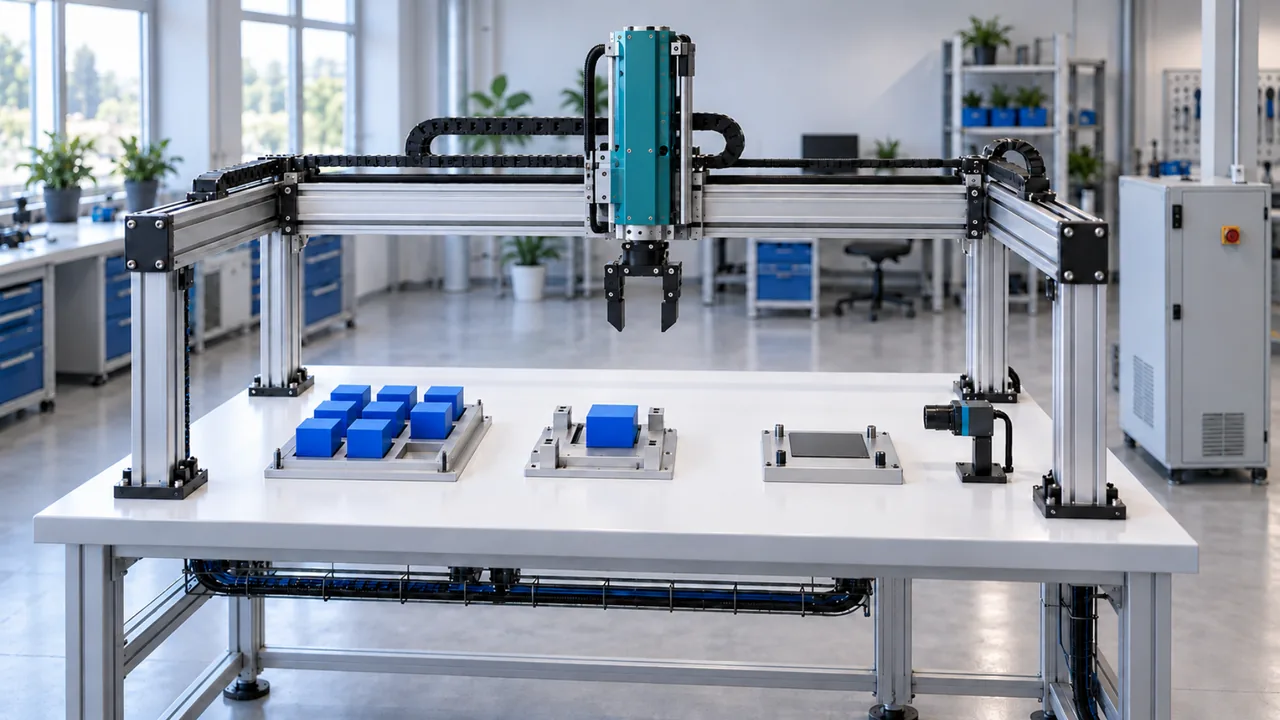
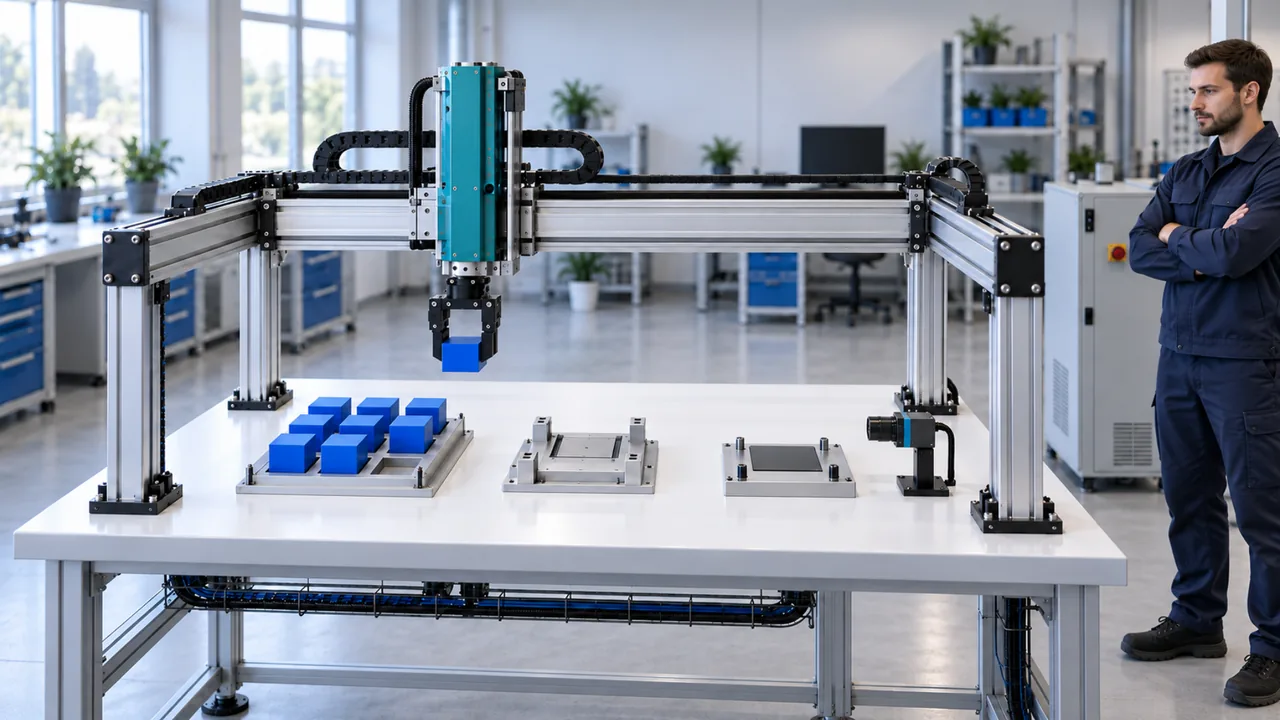
A coordinates both B transfers and C’s inspection, then observes operator removal.
Narration: A requests B’s alignment transfer, then B’s transfer to inspection, and then C’s inspection. Inspection completion is separate from a pass or fail result. Finally, A checks that the operator has fully removed the part. These small completion facts now form one coordinated process.
What to notice: Compare A’s overall order with B’s two paths and C’s inspection.
A drawing alone does not prove behavior. Run tests and keep records of what happens.
Narration: Neatly connected lines do not prove that the machine will behave as intended. We also need to check what happens when a sensor is late or a part is missing.
What to notice: Compare the completion rule in the drawing with the real sensor location.
Plan checks from the drawing through virtual devices to real equipment. These are planned steps, not passed tests.
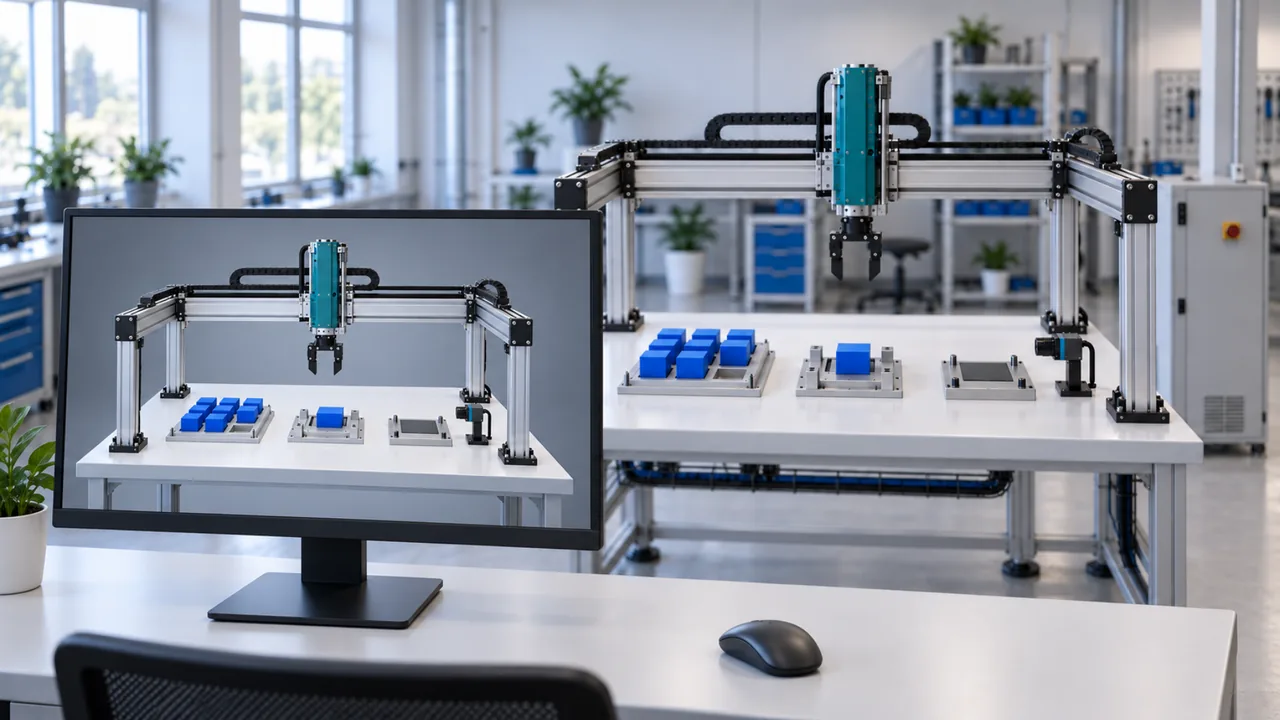
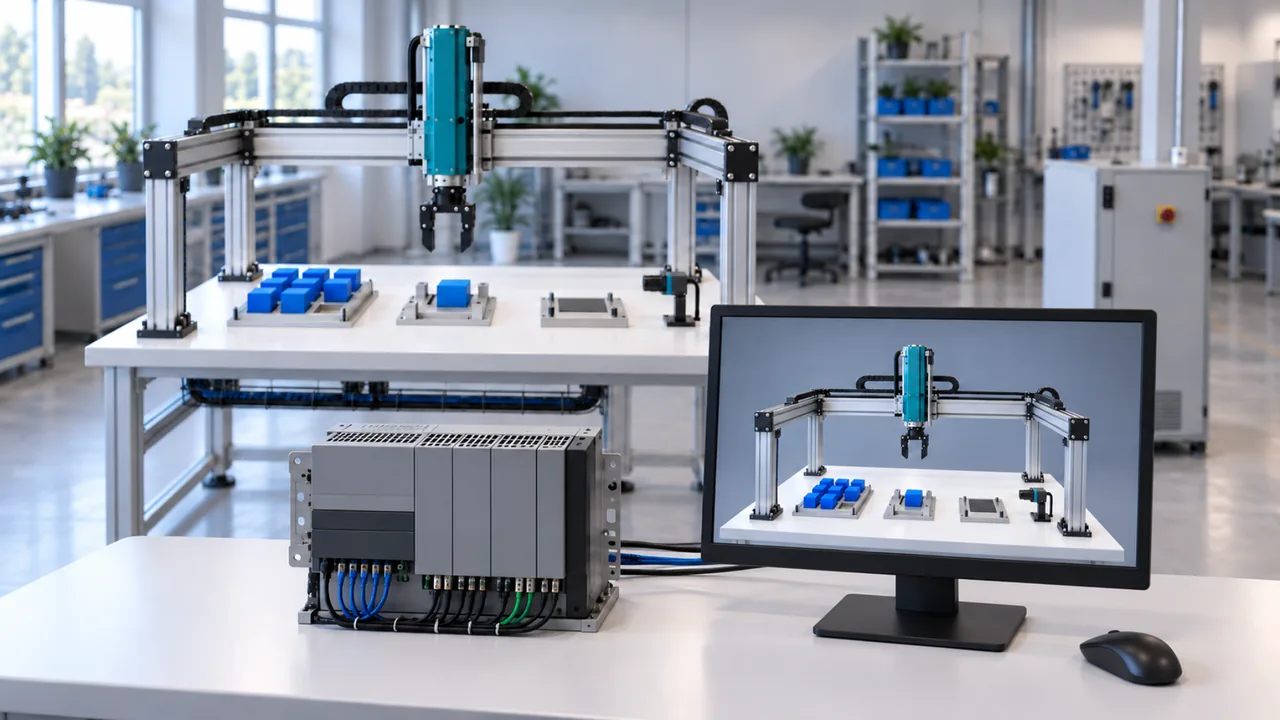
Narration: First, review the job order and try it with devices represented inside a computer. Then plan checks of the generated control program, a real controller, and finally the real machine. These are planned checking stages, not a claim that every stage has passed.
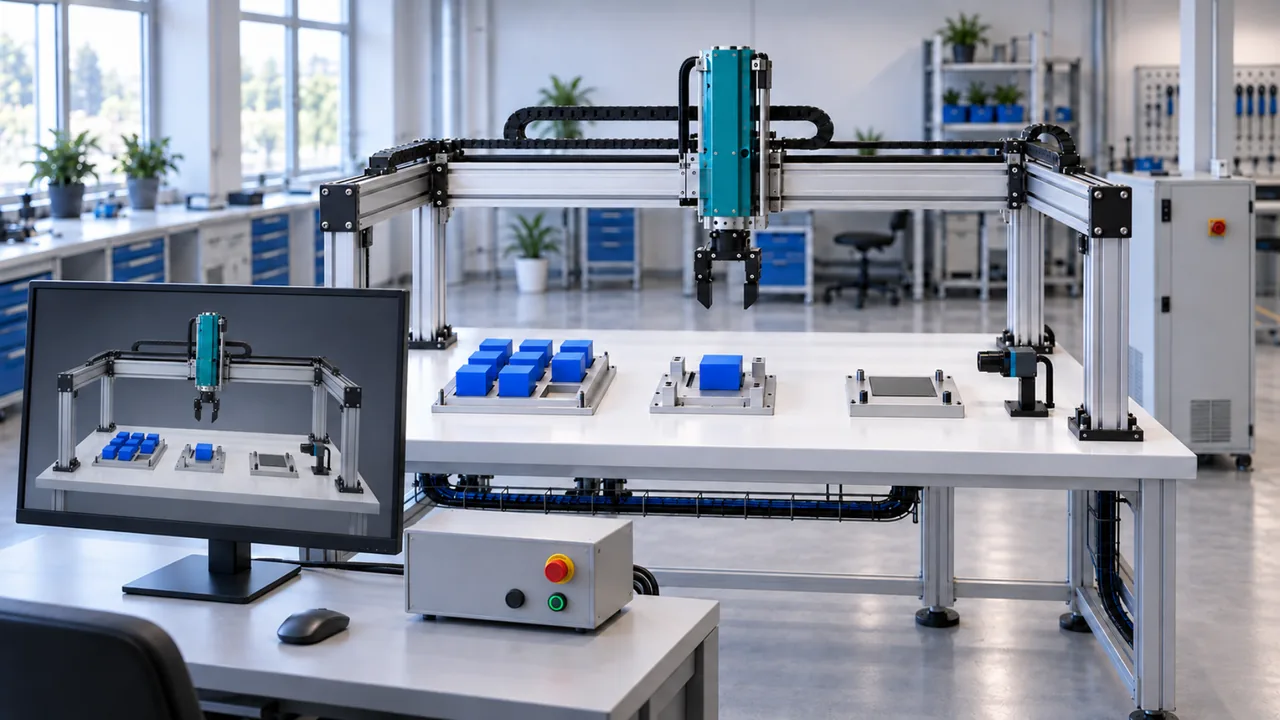
What to notice: Locate the virtual device on the screen and the real controller nearby.
Keep the job and completion rule when the test setting changes. Recheck signal connections on the new device.
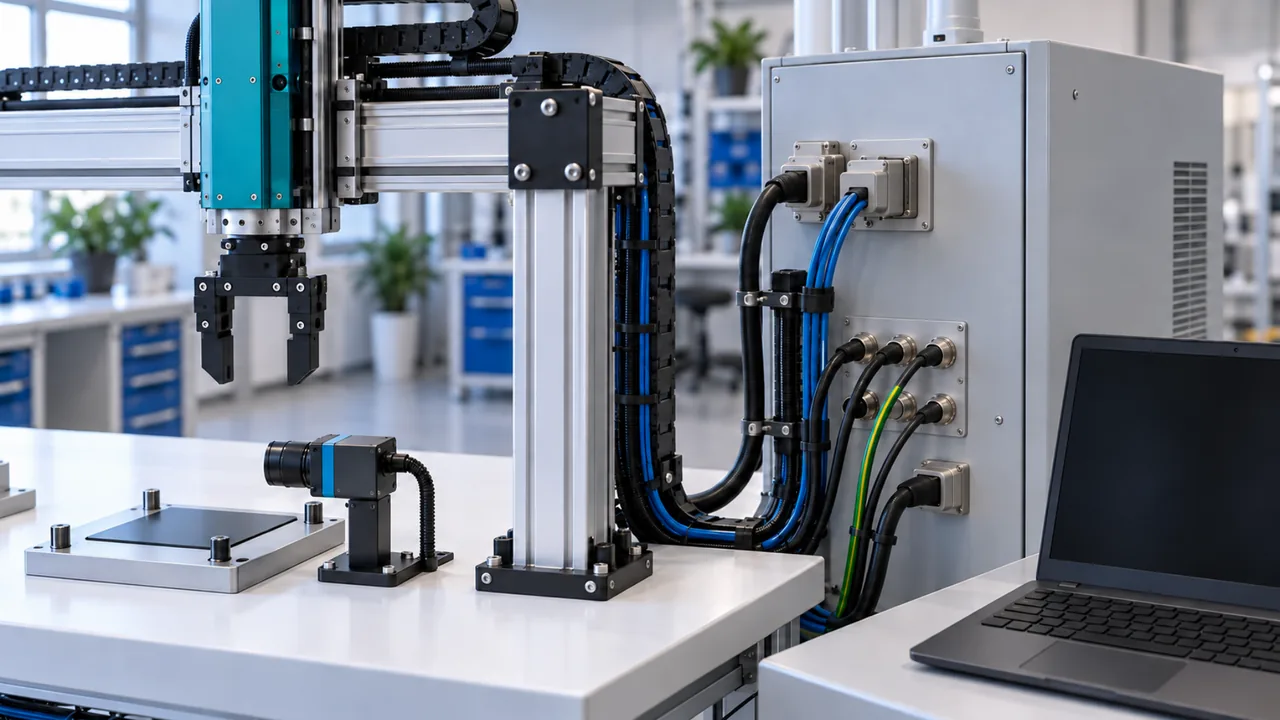
Narration: Moving from a virtual device to a real one should preserve what job is requested and what counts as finished. Whenever the equipment changes, check that each signal is connected to the right target.
What to notice: Match the virtual device with the real device doing the same job.
Start with the program and virtual devices, then use a real controller and real equipment. Record each stage separately.
Narration: First, use the generated control program to drive a virtual device. Next, connect a real controller to the virtual device, and use the real machine when ready. Keep a separate record of the behavior and results at each stage.
What to notice: Look at the virtual device, real controller, and real robot in turn.
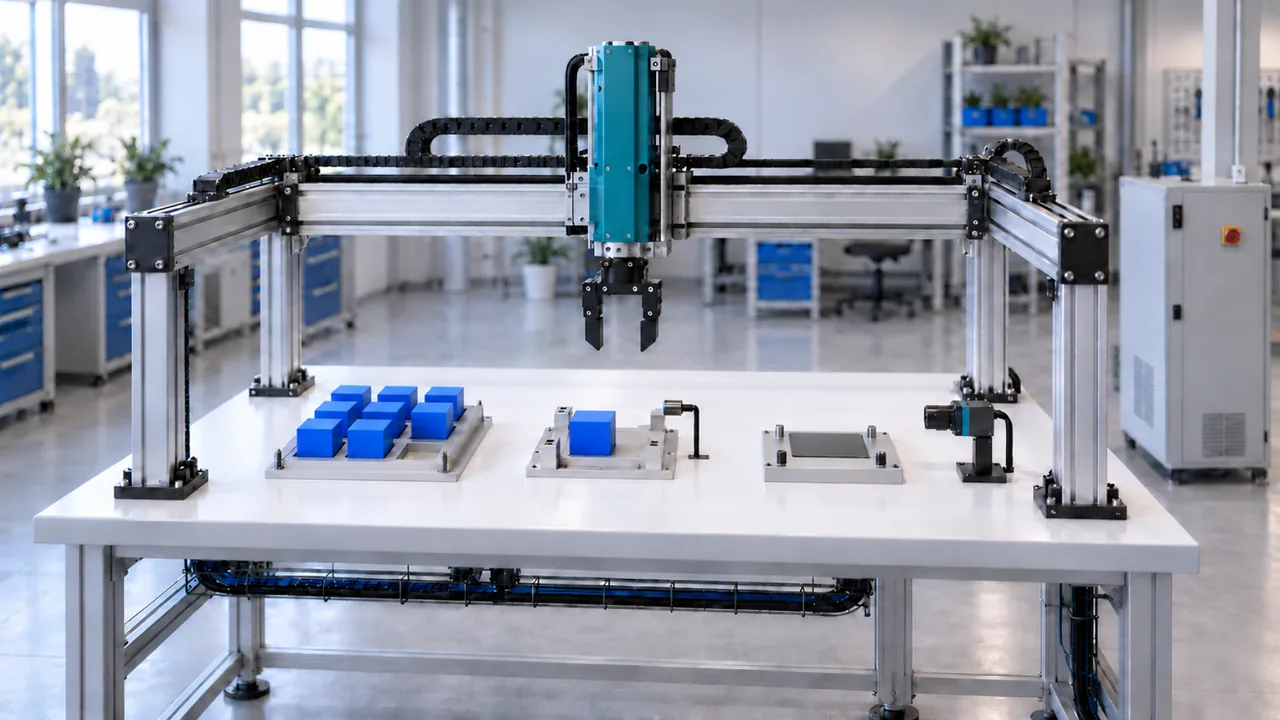
Use sensor evidence for this movement's completion. Report a delay if valid arrival evidence misses the preset limit.
Narration: Real devices can take longer than expected. Confirm the actual sensor evidence for this action rather than marking completion when an estimate expires. Set a time limit from the first run, and report missing confirmation when that limit is reached.
What to notice: Look at the arrival sensor and the part that has not yet reached it.
Check both transfers, inspection, full removal, and the next part’s start conditions.
Narration: Do not stop testing after one part. Check both transfers in order, inspection, and complete removal by the operator. Then rearm the completion marks, check the remaining parts and start conditions, and try the next part. Test an empty buffer and a missing completion reply separately too.
What to notice: Check the nine-pocket buffer and readiness after operator removal.
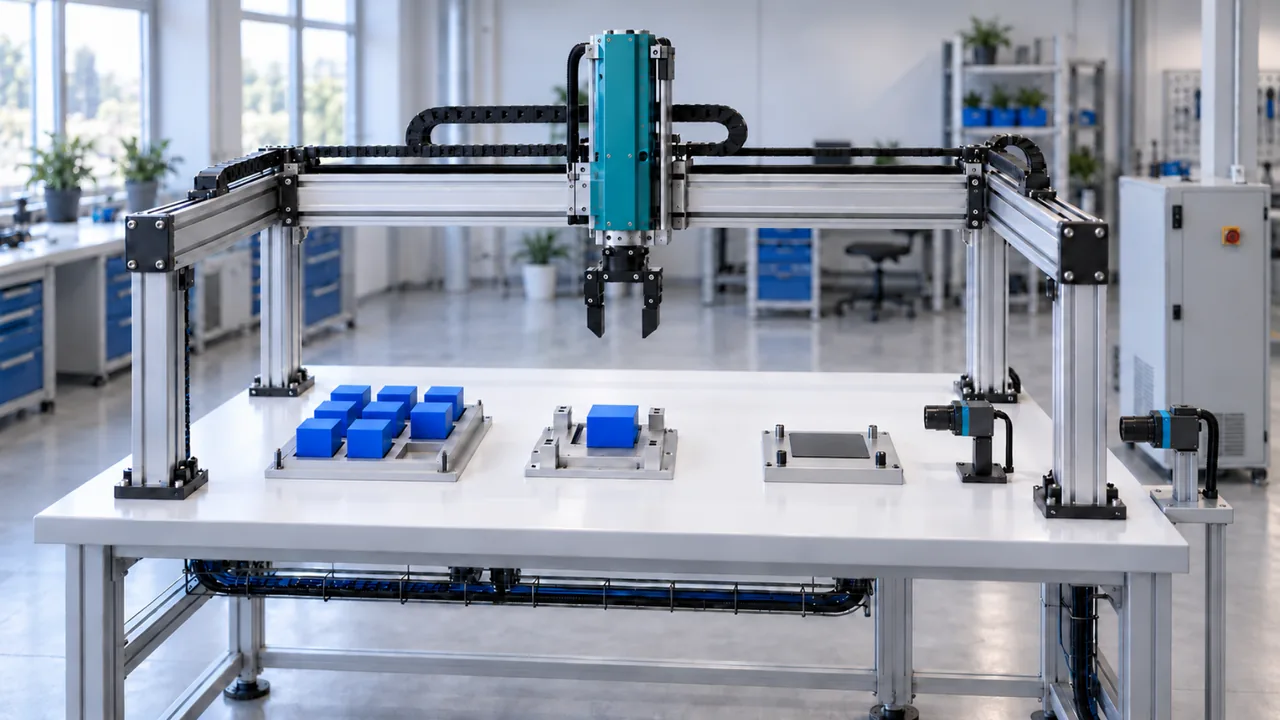
Add tasks and links using the same principles, and share device information through AAS.
Narration: We can expand with the same Works, Start links, and Resets, while agreeing on requests and results between Systems. AAS lets us share device information in a standard form. TAGs still carry the signals.
What to notice: Compare the first placement box with the larger sequence that includes another device.