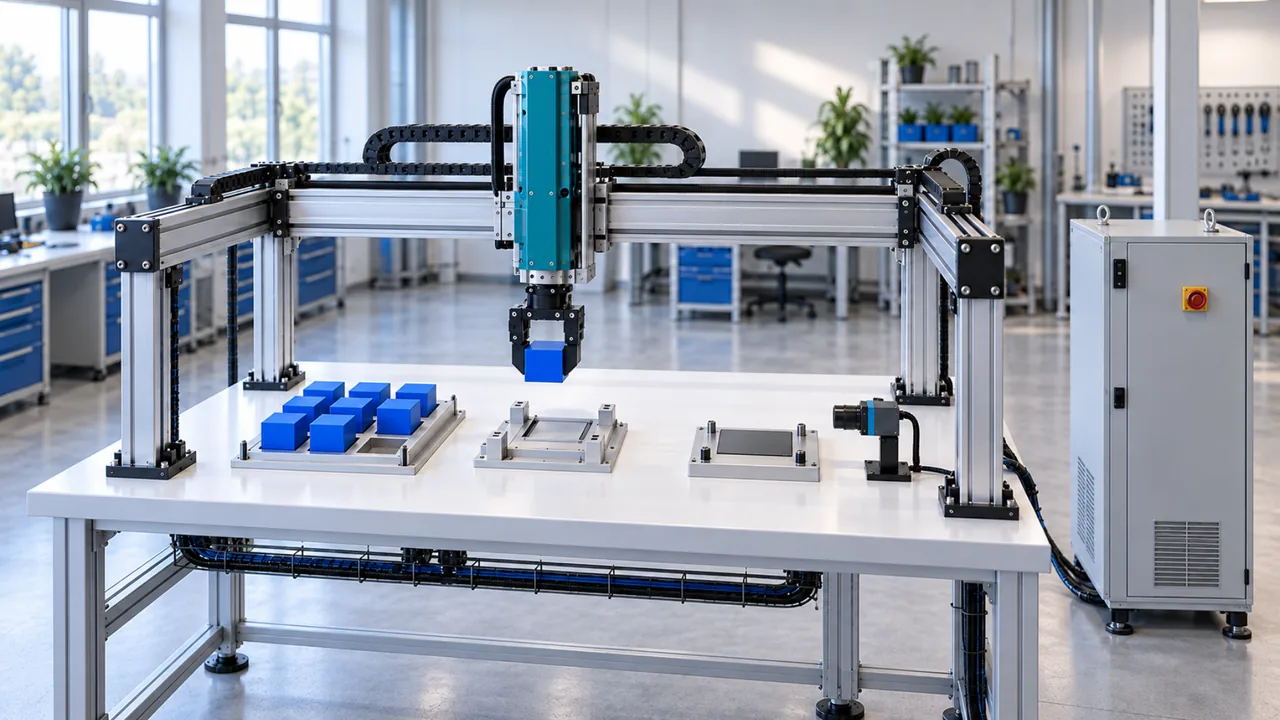
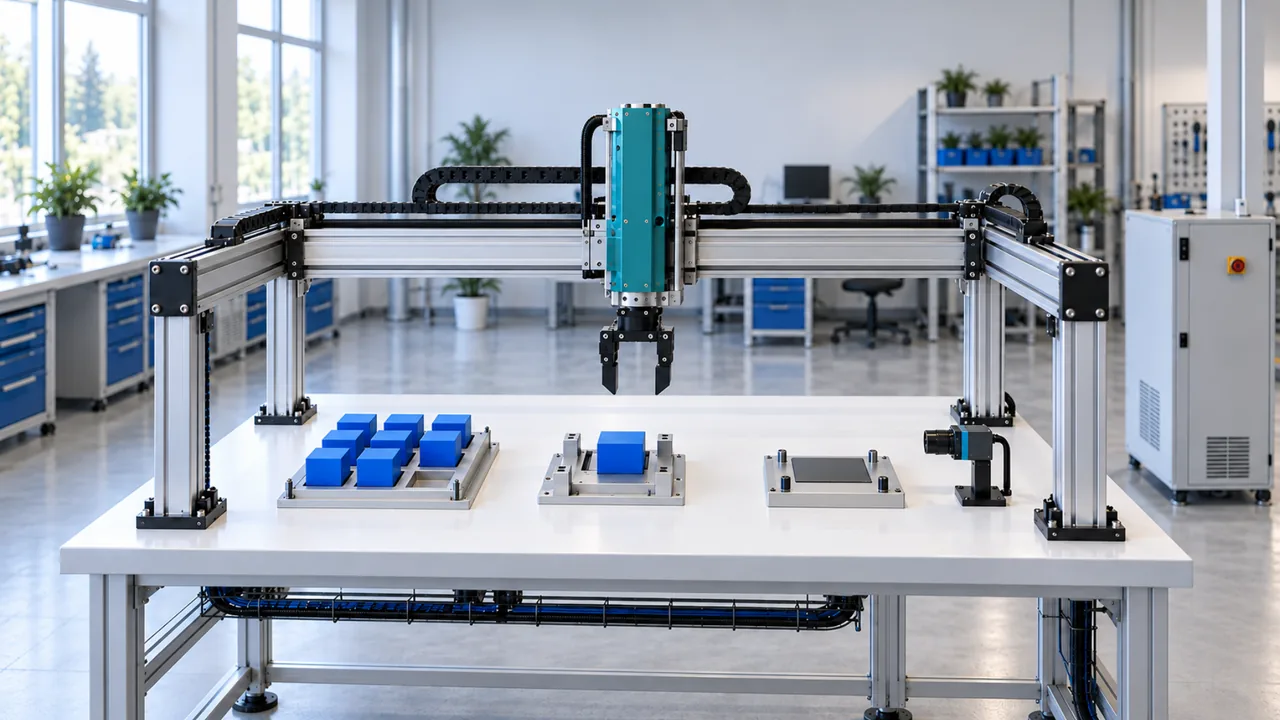
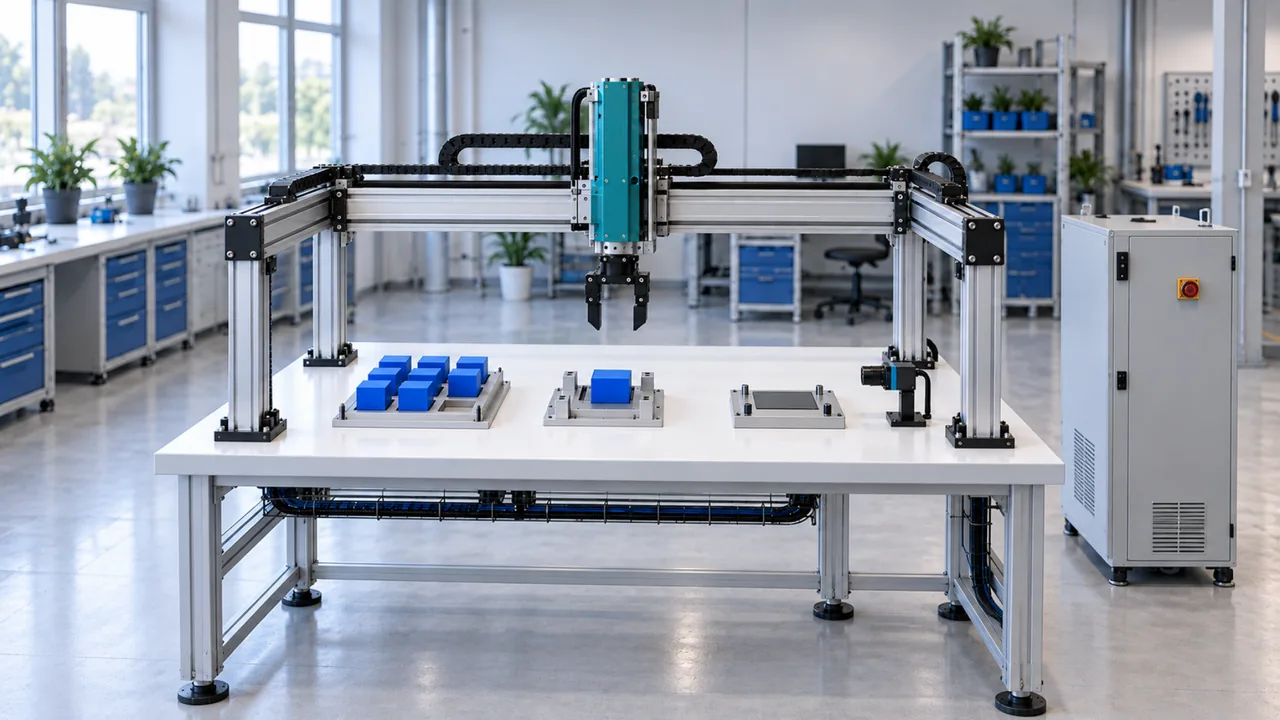
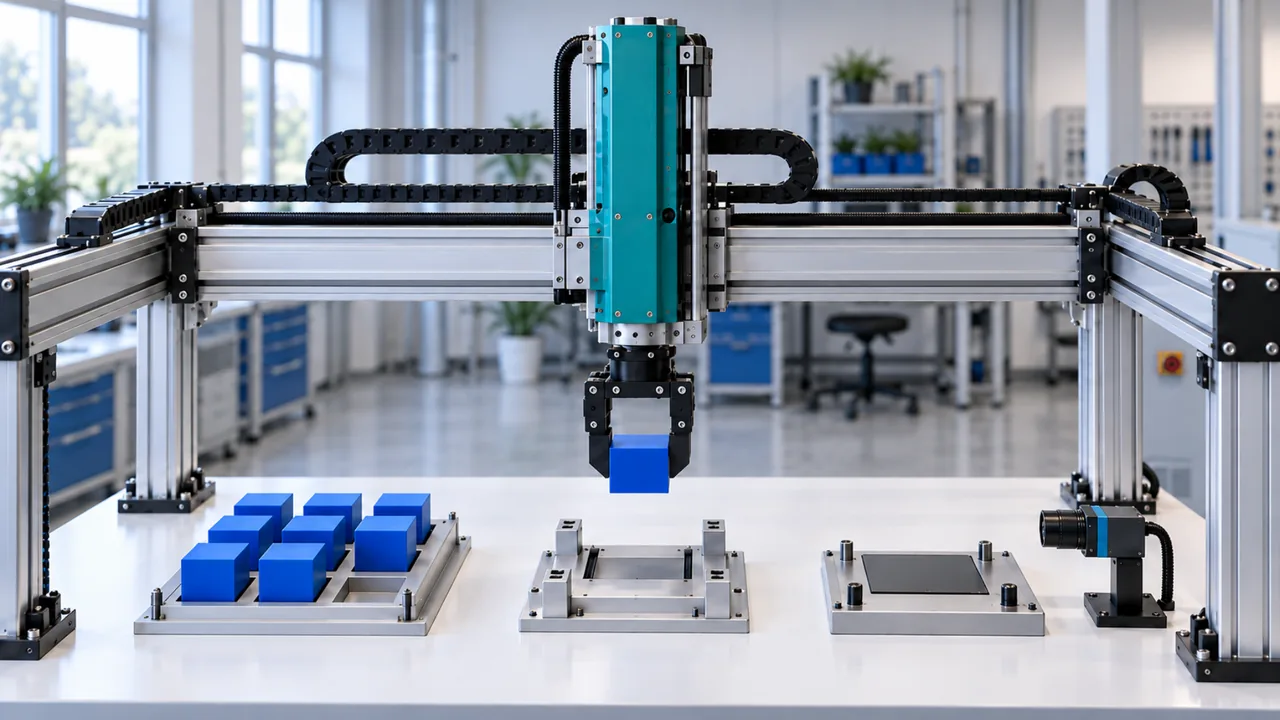
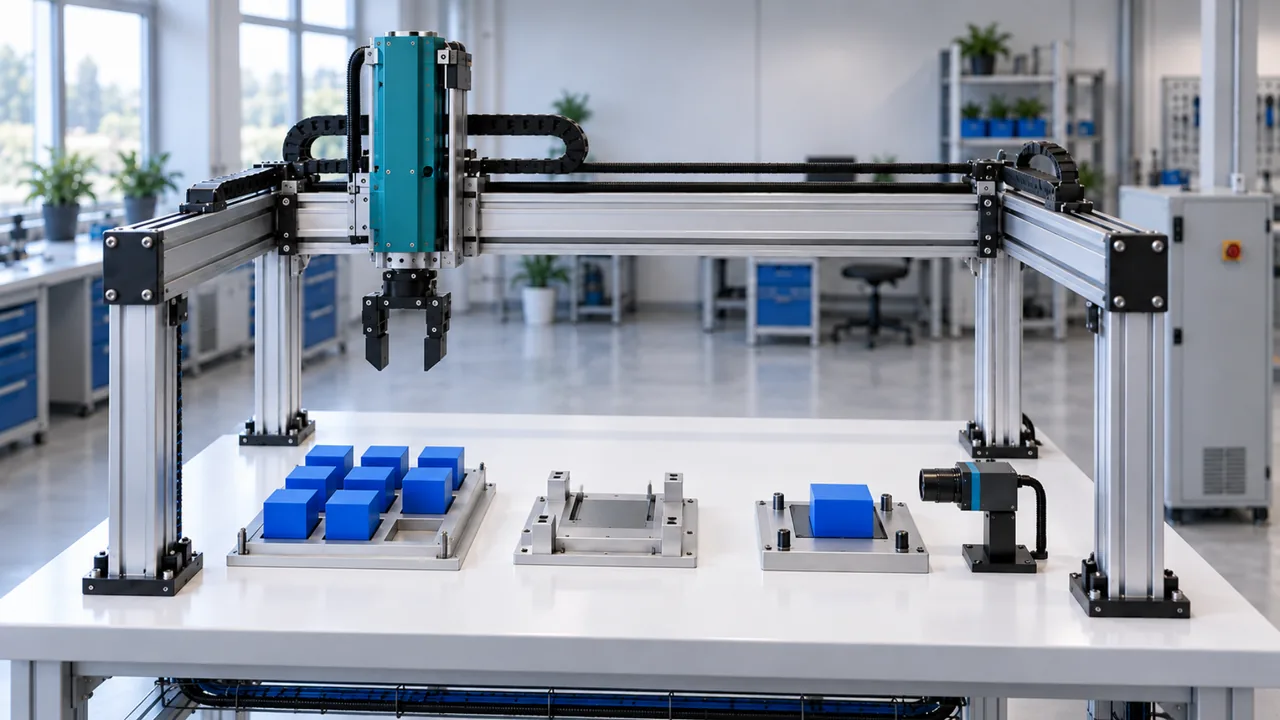
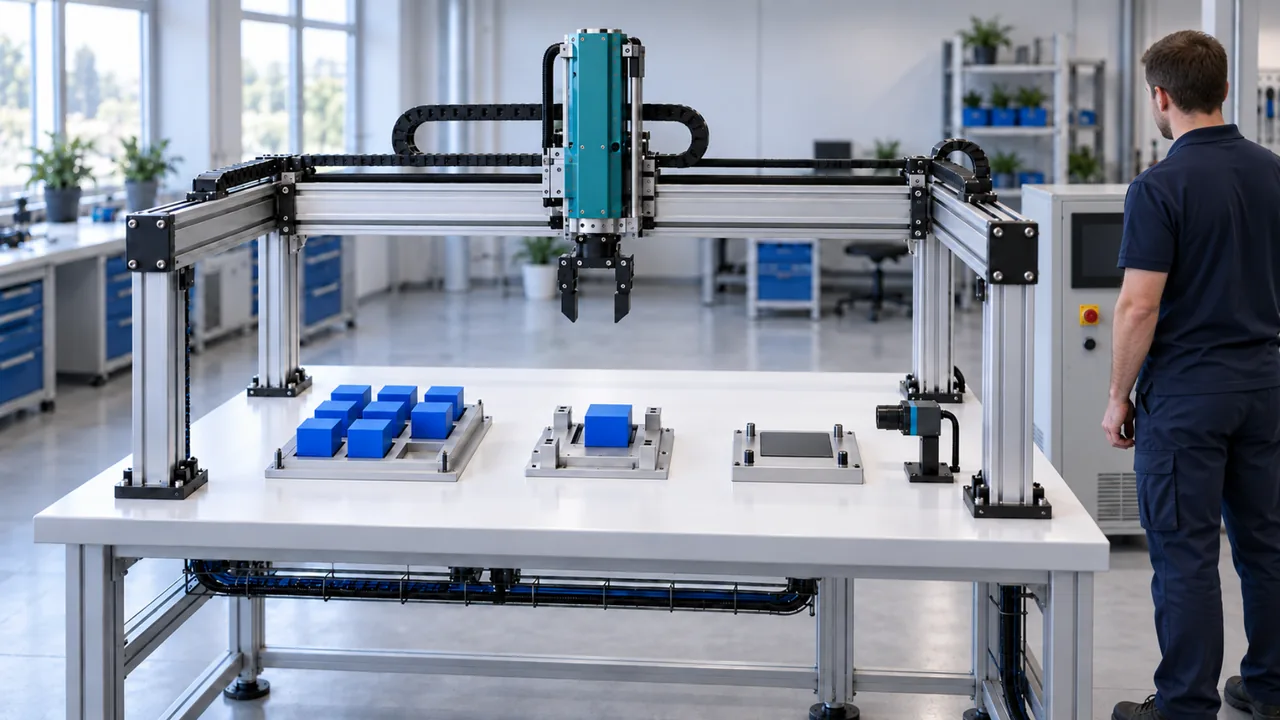
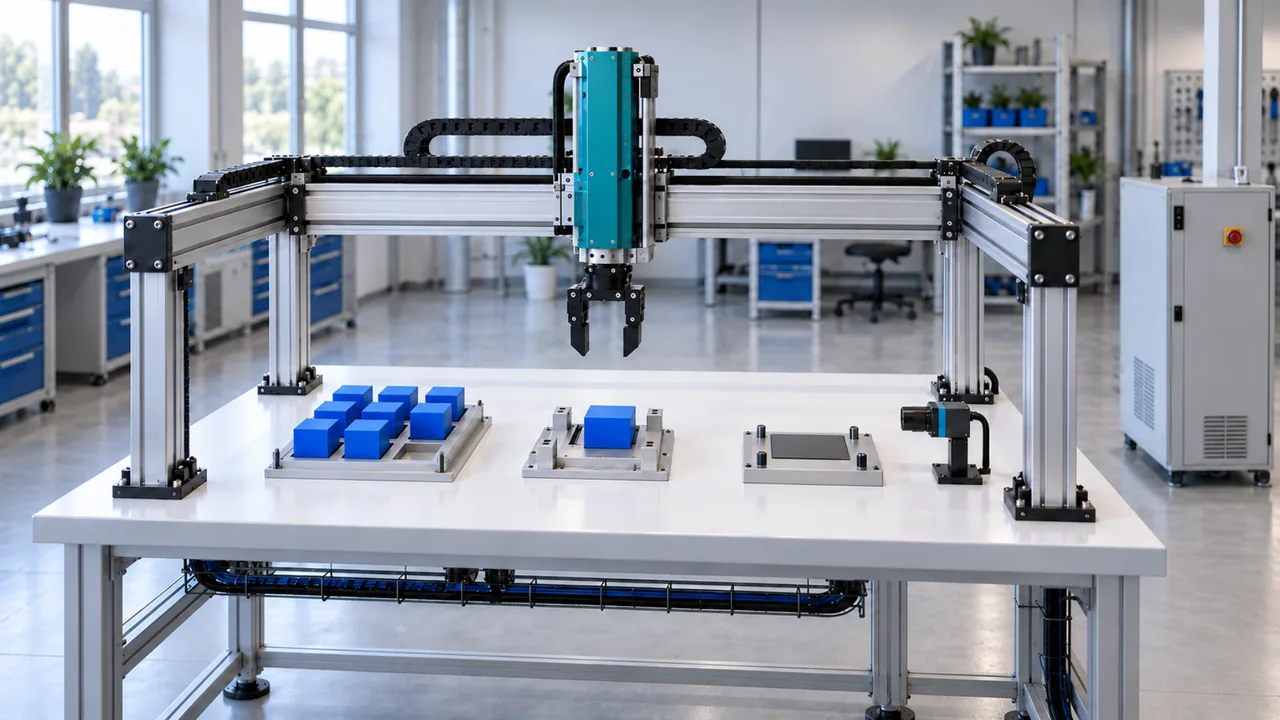
The robot moves the part, the inspector checks it, and another group coordinates the sequence.
Narration: In this machine, the robot transfers parts and the inspector checks them. Someone also coordinates the overall sequence, so we need to say who is responsible for what.
What to notice: Compare the work of the robot with the work of the inspection camera.
Changing another device's internal work makes responsibility unclear.
Narration: If the coordinator freely changes the inspector's internal state, responsibility for the result becomes unclear. Separate their responsibilities and exchange the information each one needs.
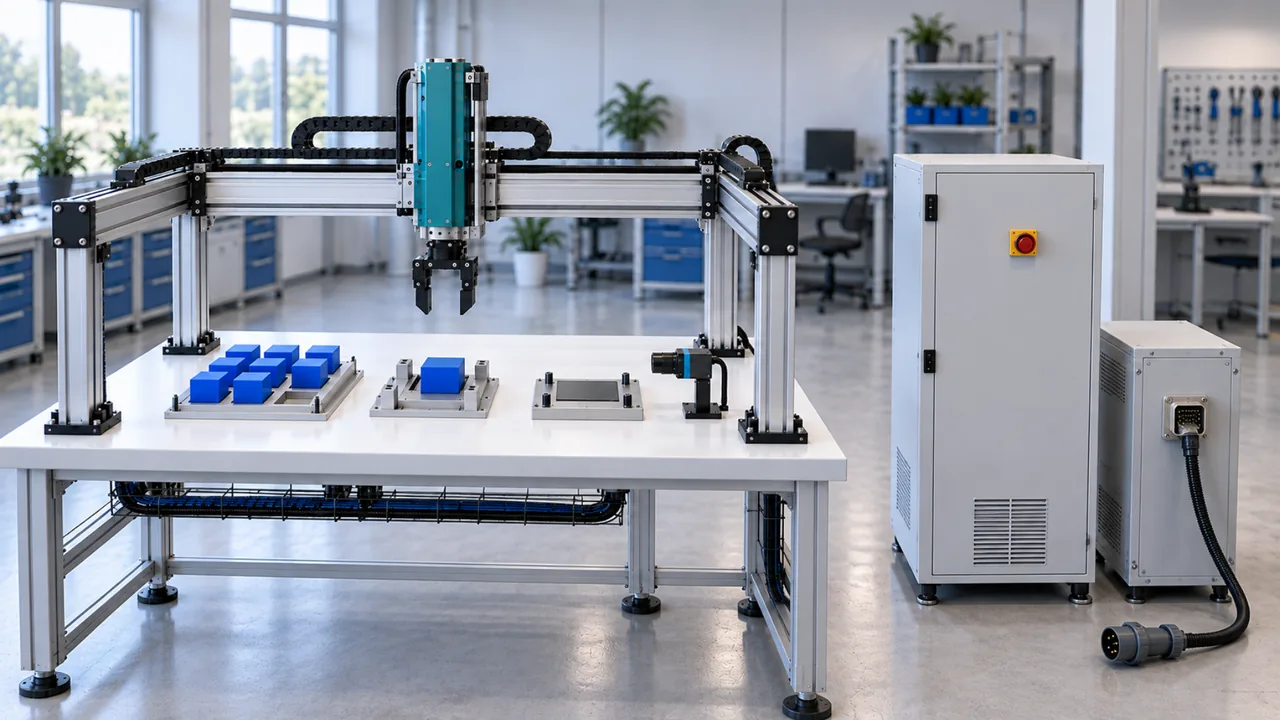
What to notice: Look at the control cabinet and the inspector with their different jobs.
Group jobs by who controls them. The box-shaped regions show those responsibilities.
Narration: DS calls a group responsible for its own work a System. Here, we draw it as a box-shaped region so we can see which jobs belong to which group.
What to notice: Find the regions for overall control, the robot, and inspection.
A coordinates the order; B provides two transfers; C inspects.
Narration: System A coordinates the overall order. Robot B provides two transfers: from the buffer to alignment, then from alignment to inspection. System C inspects the part. The picking and placing jobs we drew earlier become the detailed work inside each transfer.
What to notice: Find both paths inside B: P1 to P2 and P2 to P3.
Do not set another group's finished mark yourself. Use an agreed request and receive its result.
Narration: Directly turning on another group's finished mark could claim work was done when it was not. Instead, use an agreed request and receive the result from that group.
What to notice: Look at the boundary between the two groups.
The boxes show responsibility. Their number need not equal the number of physical controllers.
Narration: These boxes describe control responsibilities. One box does not necessarily mean one physical controller. Check who actually manages each state and command.
What to notice: Compare the real control cabinet with the responsibility groups in the drawing.
A requests both transfers from B in order, then requests inspection from C.
Narration: A first asks B to transfer the part to alignment. After confirming completion, A asks B to transfer it to inspection. Only after that transfer finishes does A request inspection from C. B does not start C directly; A coordinates the next step.
What to notice: Follow the three requests from A and their completion replies.