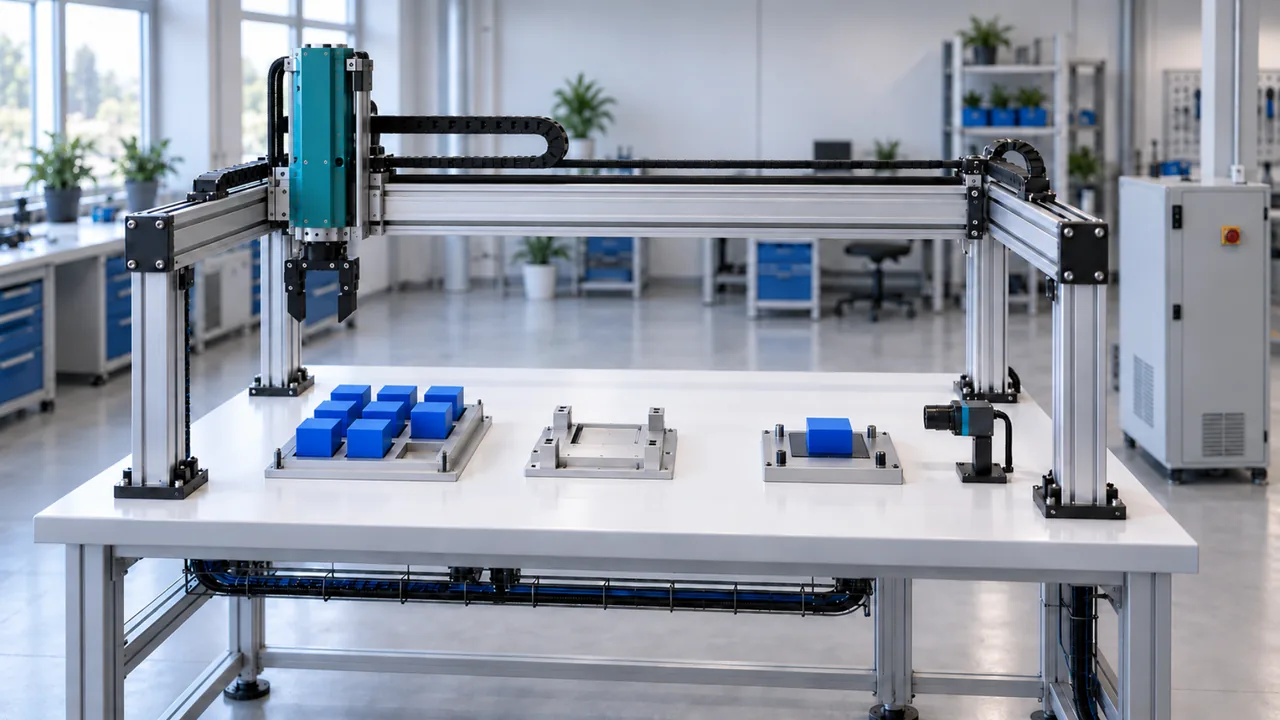
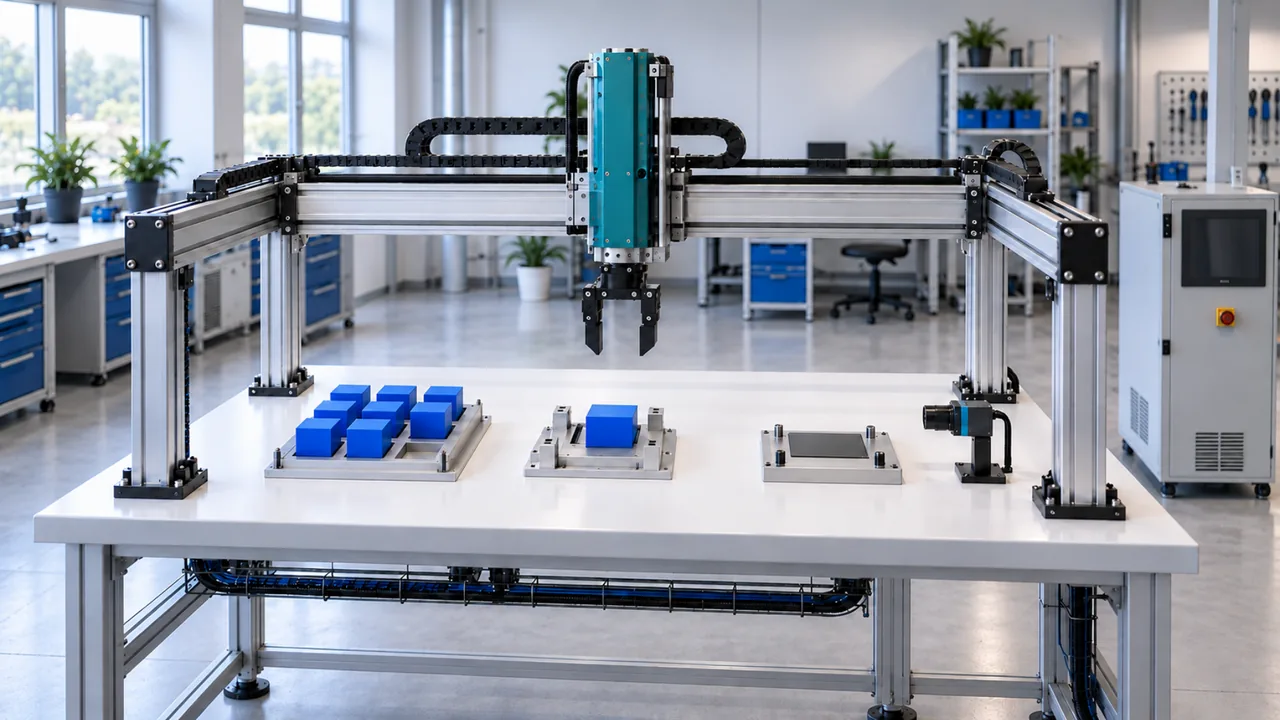
The earlier part's finished marks remain. We must distinguish them from this part's results.
Narration: The finished marks from the earlier jobs are still present. For another part, we must distinguish those old results from the new results we are waiting for.
What to notice: Compare the finished marks with the parts still waiting in the tray.
Clear an earlier finished mark when its agreed later job actually starts. This does not send the robot home.
Narration: We can connect the actual start of a later job to clearing an earlier job's finished mark. DS calls this connection Reset. It clears the mark; it does not move the robot back to its starting position.
What to notice: Look at the dashed arrow returning from a later job to an earlier one.
Clearing inspection alone is not enough. Decide which earlier marks each later start clears.
Narration: Clearing inspection alone does not make every job ready to run again. Decide which earlier marks each later start clears, and check the other conditions needed for another part.
What to notice: Compare the forward start arrows with the returning clear arrows.
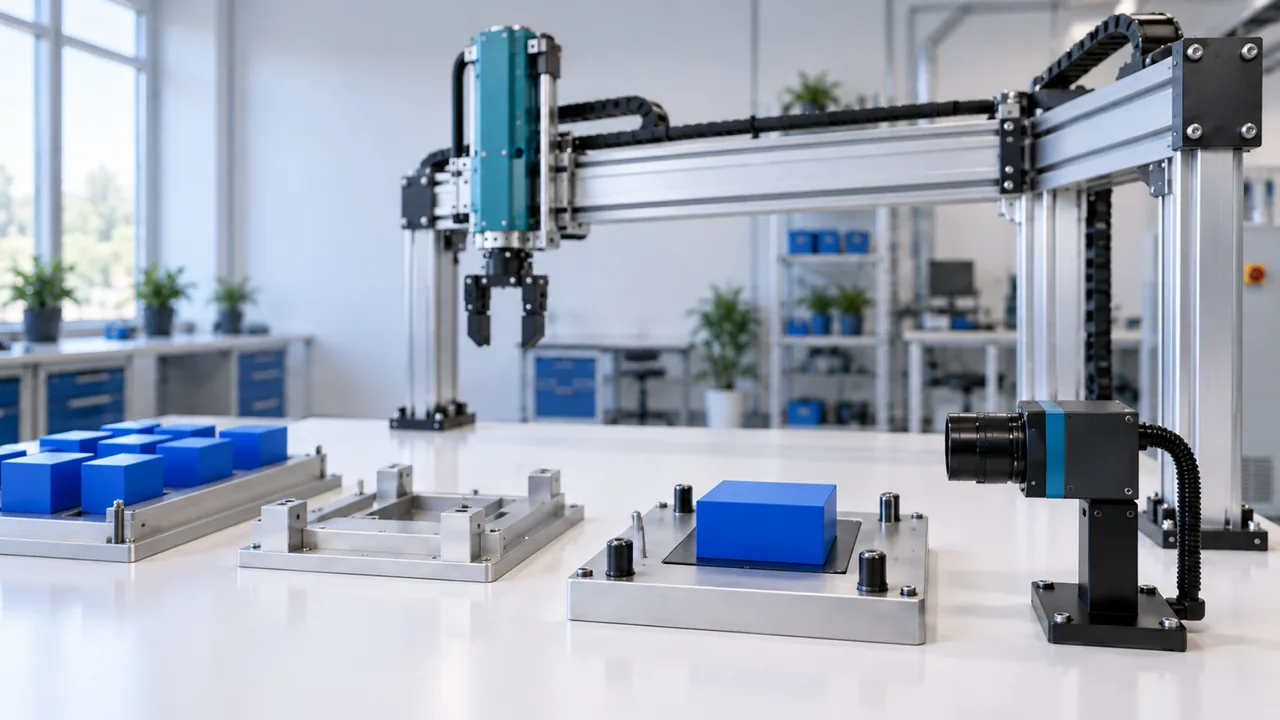
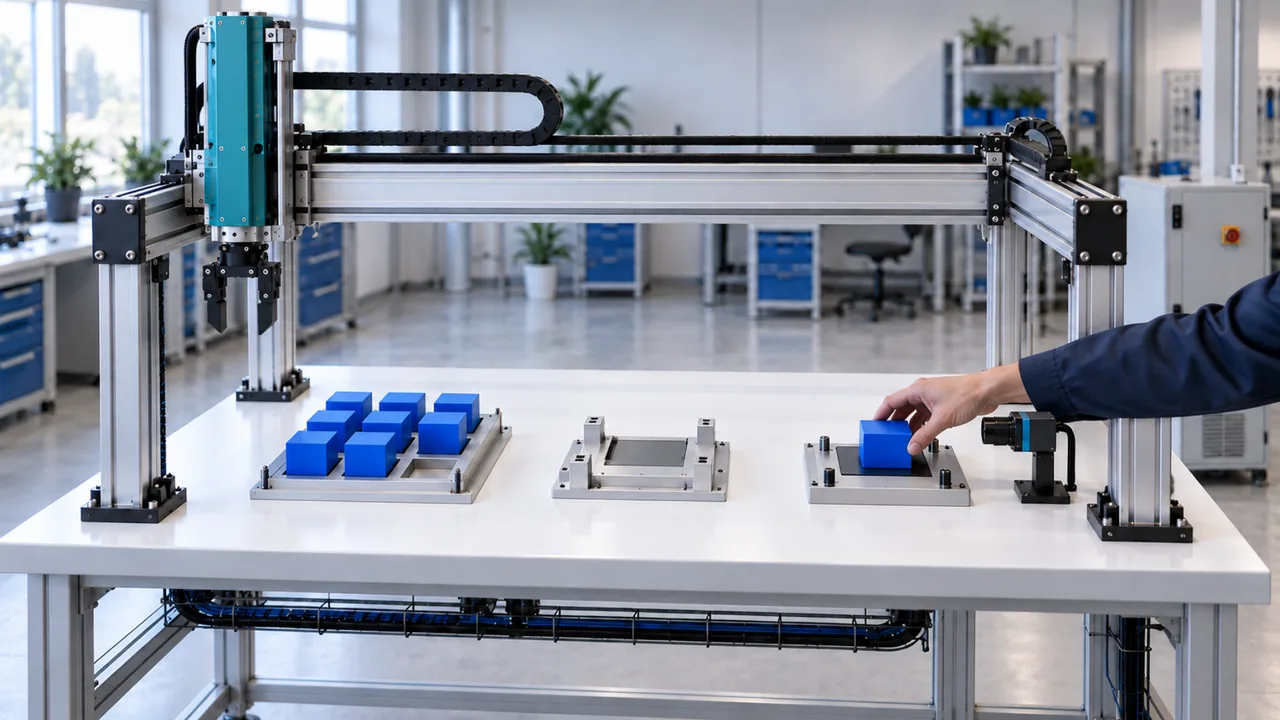
Grasping is not removal. Clear the inspection mark only when the job confirming full removal actually starts.
Narration: While the robot is stopped, the operator grasps the inspected part. Grasping it does not yet confirm removal. After full removal is confirmed, the removal-check Work starts and clears the linked inspection completion record.
What to notice: Check whether the part has fully left the inspection support.
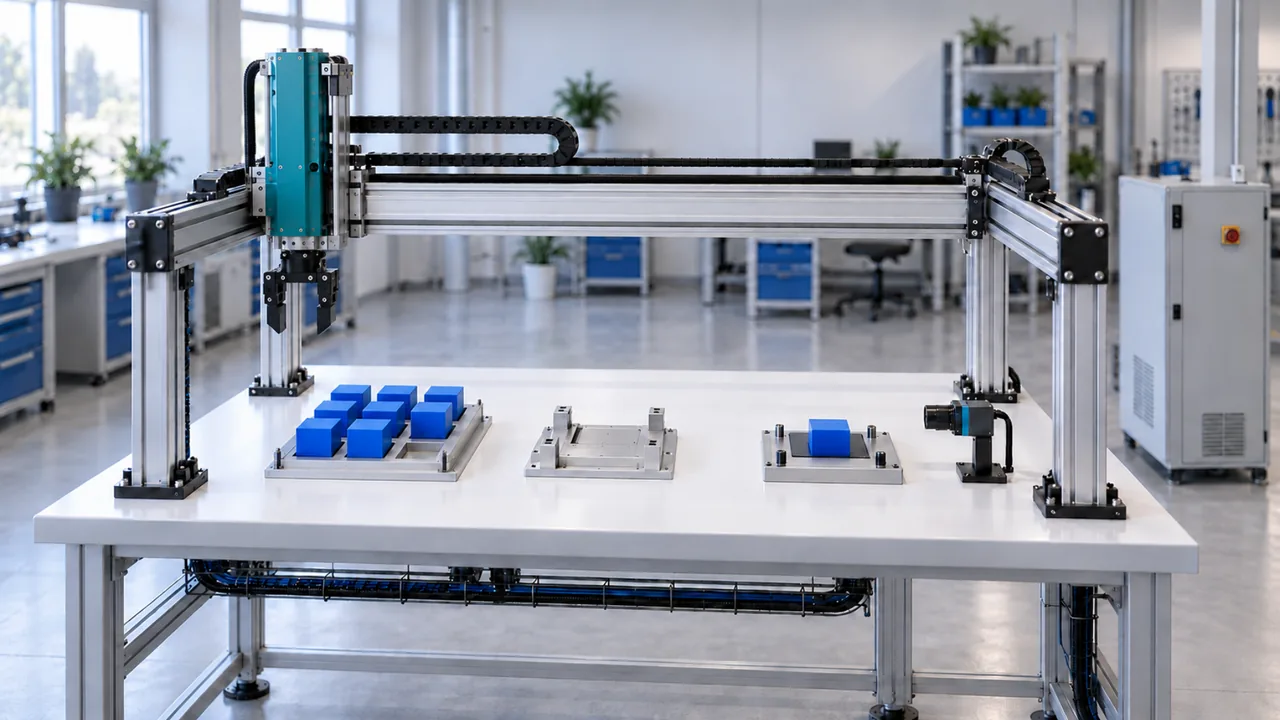
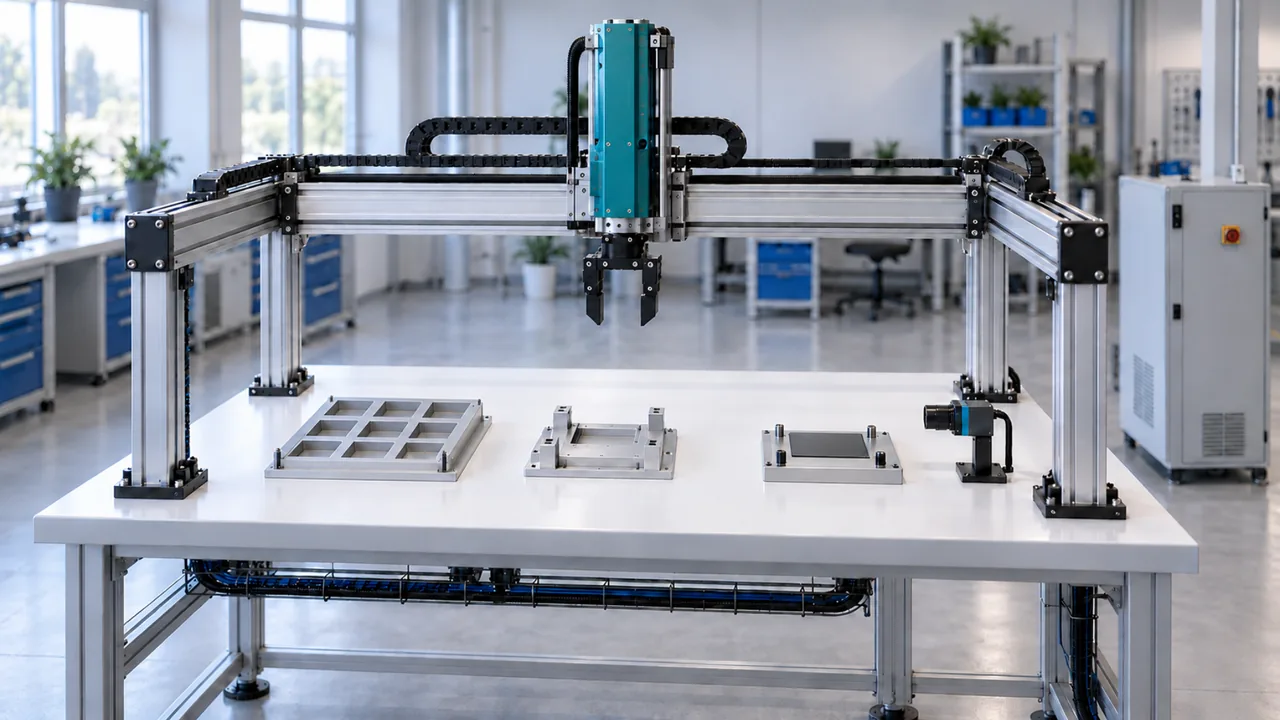
Clearing marks cannot supply a missing part. Wait until another part is ready.
Narration: Preparing the marks for another run is not enough; there must also be a part to pick. When the tray is empty, the robot waits for a new part to be ready.
What to notice: Look at the empty three-by-three tray.
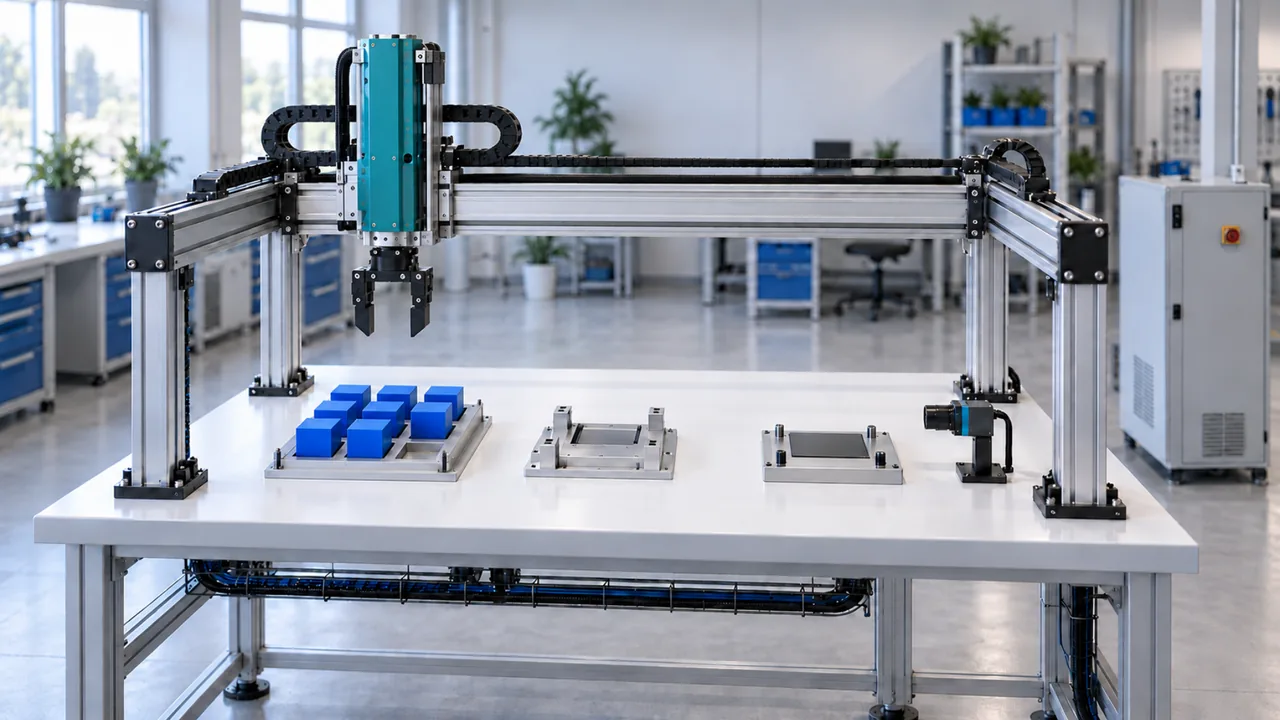
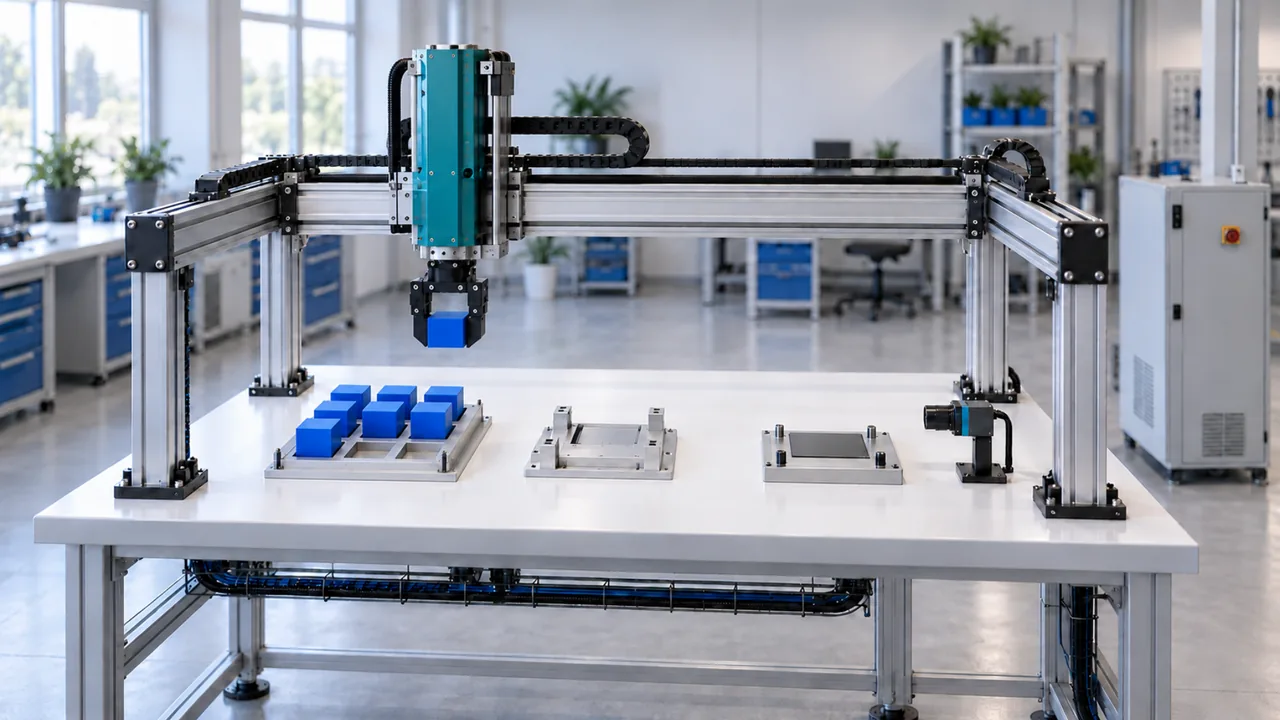
Check the earlier marks, start conditions, new part, and empty inspection space together.
Narration: The earlier part has been removed and another part is available. After checking the needed marks and start conditions, the machine can begin work on the next part.
What to notice: Look at the newly picked part and the empty inspection station together.
Decide who coordinates the order, who moves the part, and who inspects it.
Narration: We now have a sequence that can be repeated. Next, separate overall coordination, robot movement, and inspection into the responsibilities they actually have.
What to notice: Look at the robot, the inspection camera, and the control cabinet in turn.